
Smart Eye 1Q26: Going Into the Fog
A company doesn’t become market leader by forever parroting “Clear Market Leader.” It does so by publishing trustworthy unit or revenue guidance which can be validated by third-party analysis.

Smart Eye has published its report for 1Q26 (Jan-Mar). The headline grabbing statistic of automotive license revenues growing by more than 200 percent implies Smart Eye’s estimated global DMS deliveries in the first quarter was about half of the actual total reported by Seeing Machines. Of course the company won’t report hard data for this metric.
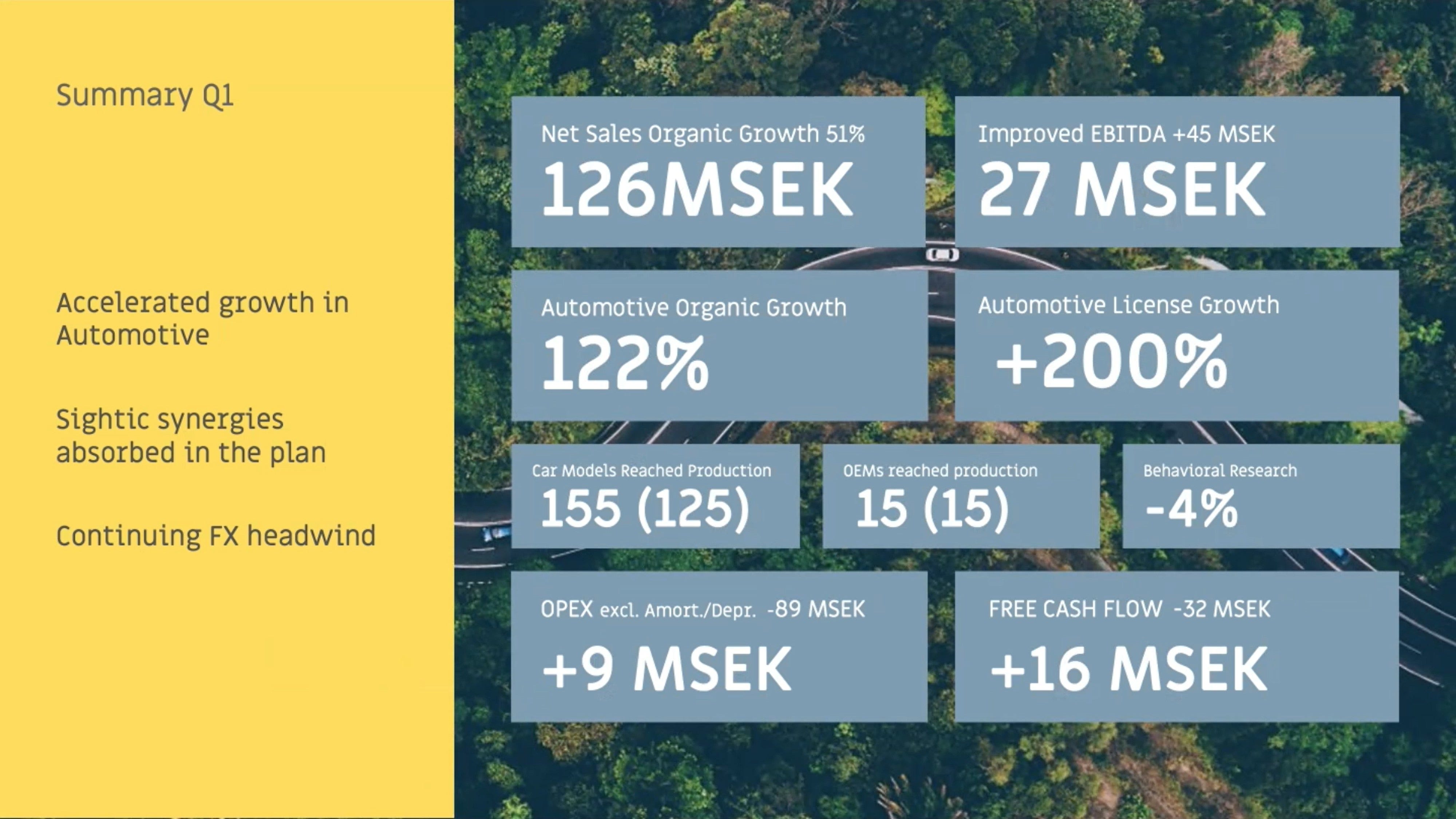
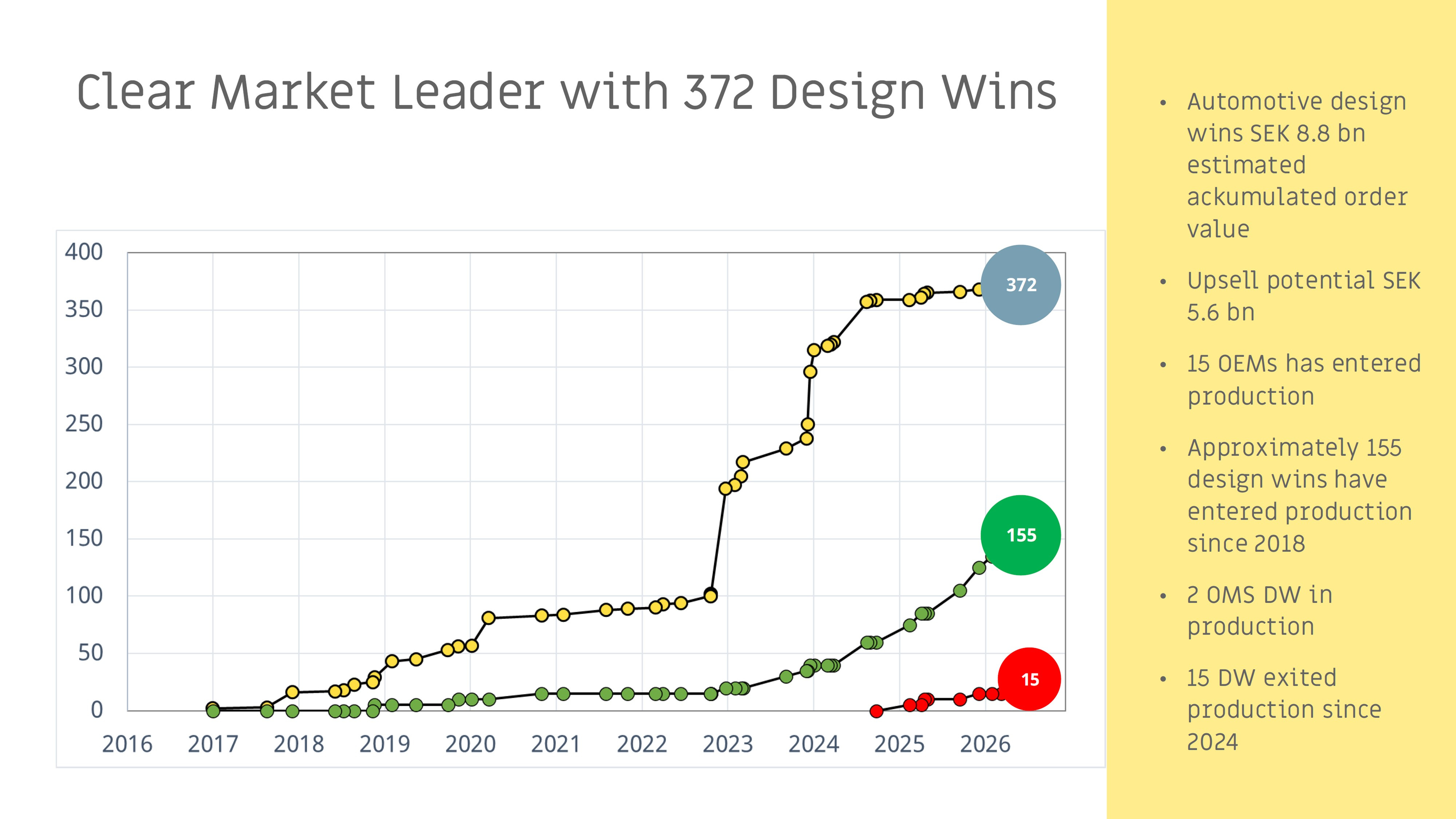
Instead the company continues to declare itself the “Clear Market Leader with 372 Design Wins.” But exactly what constitutes a “design win” is still unclear, let alone the significance of having 372 of them.
Market analysis ranks market share in the form of unit shipments or revenues generated. Different suppliers always use definitions flattering to themselves, but the role of a market analyst is to attempt to normalize the data across suppliers to ensure consistency. There is always an element of estimation and always a margin of error, but a clear enough picture will emerge.
Despite all of Smart Eye’s efforts to blur the details of its cars on road position, the company sprays out sufficient data in its ongoing PR to be able to paint a “good enough” picture.
In contrast, Seeing Machines provides the actual delivery data, so no estimation or margin of error there. It publishes the data each quarter irrespective of whether the numbers are good or bad, which establishes trust in the reporting process over time.
The big picture is that, on a global basis, Smart Eye and Seeing Machines are racing into the lead for DMS, with Tobii trailing far behind. Smart Eye now reports 4M+ cars on road with its DMS as of 1Q26, with Seeing Machines ahead on 6.1M.
Smart Eye gives estimates of its average software license per car at about US$4.8 (SEK 45). Statements made by Seeing Machines CEO Paul McGlone confirm its average software price is closer to US$9 (SEK 85).
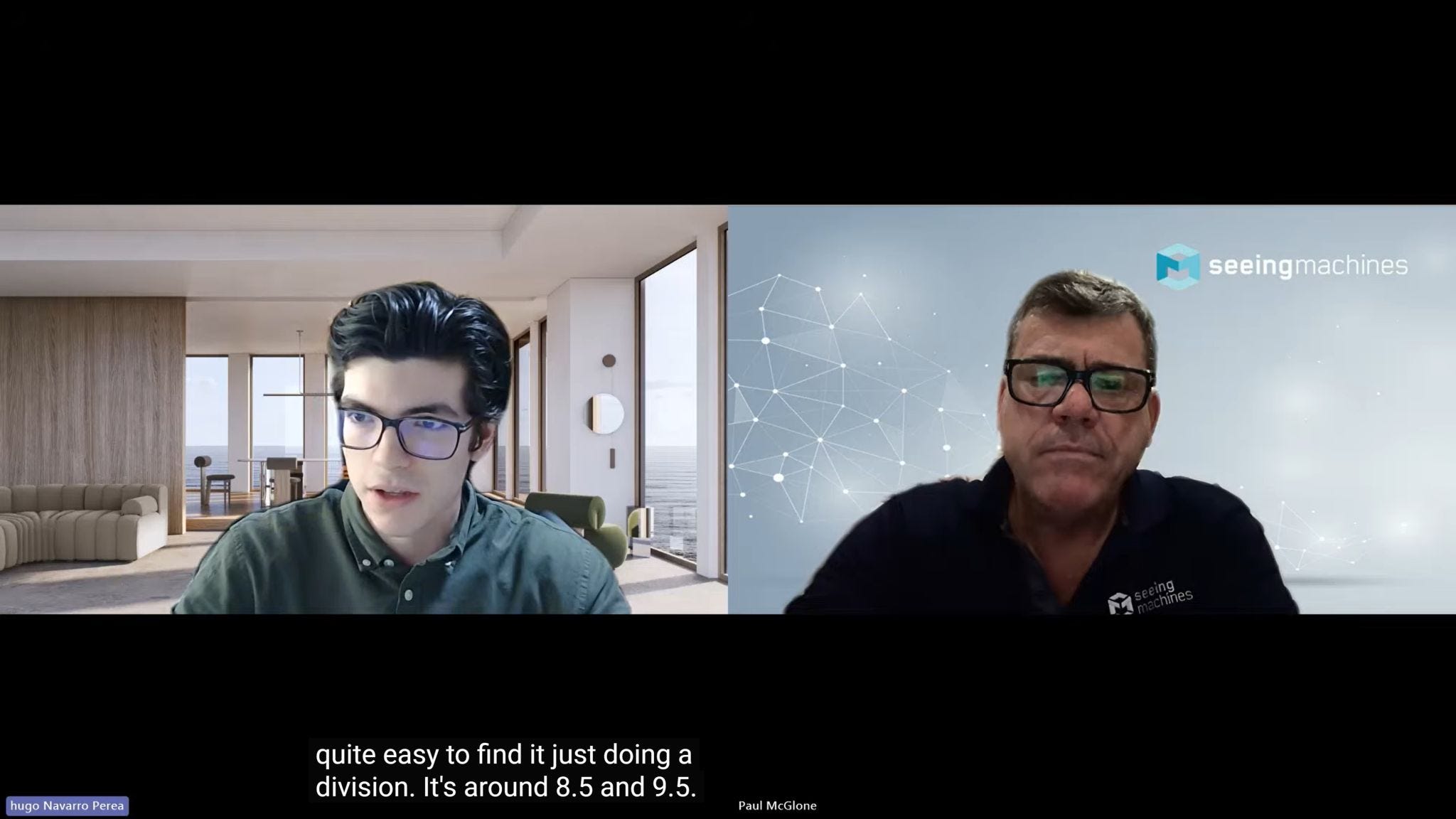
Source: Hugo Navarro/YouTube. Click to watch video
The facts tell their own story: With about double the average software price, Seeing Machines needs to ship half as many units as Smart Eye to generate the same market share measured in revenues.
We can easily see Smart Eye’s automotive strategy: It bought market share by offering crazy software prices. In automotive, that always works wonders with OEM purchasing departments and guarantees contract wins. This is what the Smart Eye PR still seeks to focus attention on.
But the delivery data show a completely different picture: Seeing Machines is far ahead of Smart Eye. Irrespective of the “design win” totals, when it comes to actually embedding DMS software into cars, OEMs are choosing better Seeing Machines software over cheaper Smart Eye software.
Design wins PR won’t pay the bills. What pays the bills is high-margin software license revenues generated from rising cars on road totals. So let’s get into the Smart Eye Fog and go back to the start of 2022 to make best estimates for its cumulative and quarterly automotive DMS shipments. We can then put them side-by-side with the Seeing Machines actual reported data to better understand what is going on.
Cumulative shipments
Smart Eye declared passing 1M cars on the road in July 2022; 2M cars in 3Q24; 3M in 3Q25; and 4M in 1Q26. The best estimate to unravel the Smart Eye picture is shown below.